
What is “Music Theory”, and why does my child need it in their piano studies?
Wouldn’t it be nice to just “sit down and play the piano” without having to learn how to read notes, count beats and rhythm, and learn about scales and chords?
As nice as that dream sounds, it’s just that- a dream. The reality is pianists, especially young pianists, need some structure to give them the tools to be able to play. And learning music theory is what actually gives pianists the ability to just “sit down and play the piano.”
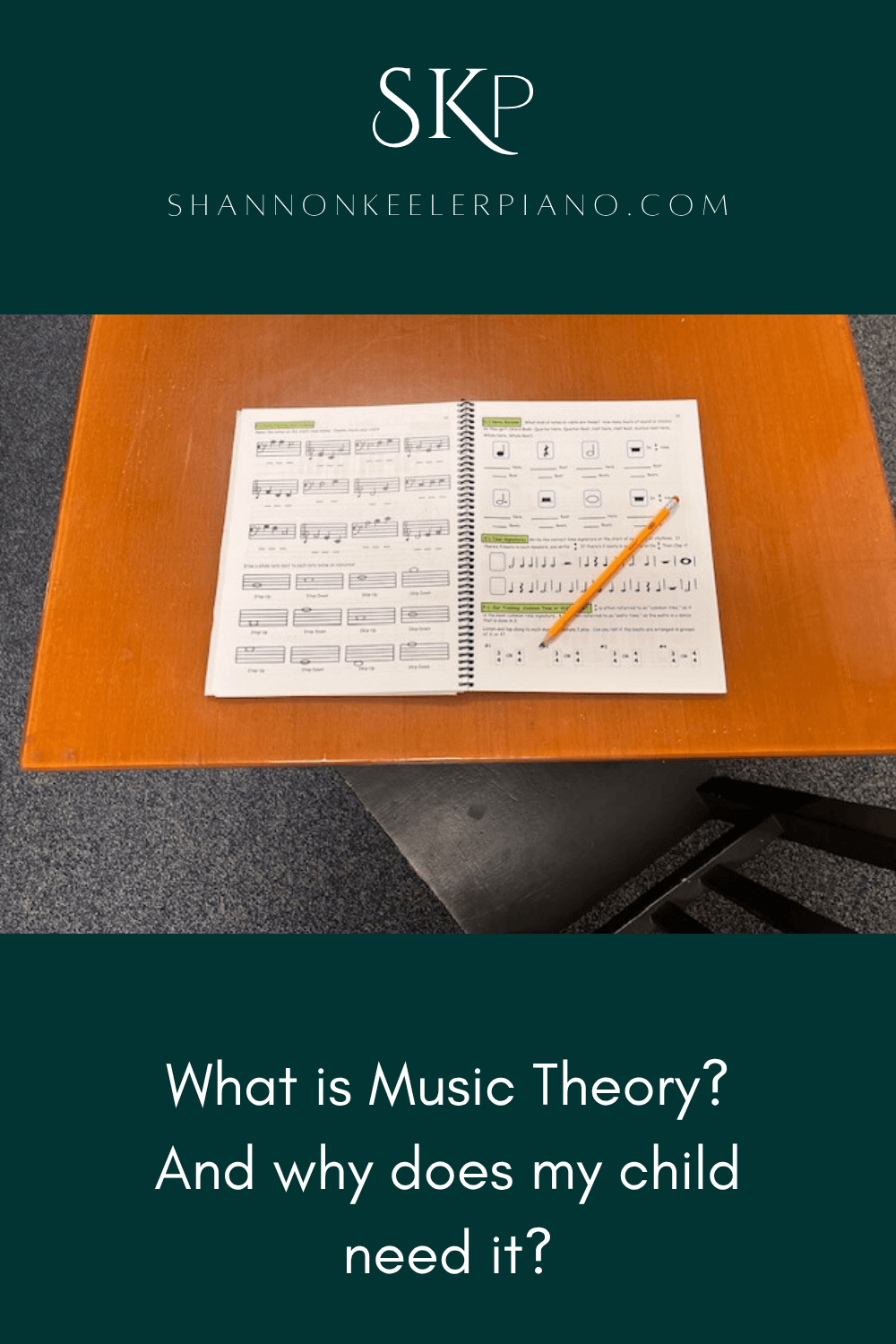
About 15 years ago, at my community music school, we started offering group theory classes for piano students to take in addition to their weekly private lessons. We would work on the different practical elements of music, such as note reading, rhythm, music analysis, and music listening through rhythm counting exercises, timed note reading tests, written worksheets, ear training, and more. It was a way for students to process and master music concepts without the added layer of complexity of playing their instrument.
Not all of our students had the time or the motivation to participate in these theory classes, but many did. And as the years passed, we saw an ever-widening gap between those students who worked on music theory on a regular basis and those who didn’t.
The students who worked on music theory regularly:
Memorized music more easily
Recognized patterns quickly
Understood symbols in the score more naturally
Read music more fluently
Understood the bigger picture of keys, key centers, chords, and chord progressions
It became very evident to us over the years that music theory is absolutely worth including in every pianist’s studies regularly.
So what is music theory?
Traditionally, music theory in the early years of piano studies involves: naming notes on the staff, writing in rhythm counts, identifying time signatures, building scales and chords, learning terms, and identifying intervals. In many ways, it’s a bit like geography (memorizing facts) mixed with math (figuring out how music works through patterns and relationships). And while all of that is important in younger beginner’s theory studies, it really is only part of the picture.
I have taught many years of beginning-level piano theory to young pianists using a variety of materials. What I have found is that often a direct connection to music itself is missing. When this connection is missing, music theory becomes random facts to be memorized.
In addition to the components listed above, a well-rounded approach to theory should also include:
Ear training to learn to identify concepts through another sense besides the eyes/reading
Doing through playing the concepts we’re learning about: drawing a C scale is great. Playing a C scale, then drawing it, is even more relevant!
Creating both through improvisational prompts and composition prompts.
Listening to real music and finding the elements we’re studying within the pieces.
This is the “secret sauce” to making music theory relevant. Instead of filling out worksheets, young pianists will start thinking and understanding the concepts like true musicians.
One more piece of the perfect young pianist theory experience: Developing personal musical taste.
This final piece of the theory menu is a combination of music appreciation, music history, and creativity. It is connecting with other composers, past and present, and getting inspired by them.
Young listeners should be exposed to different composers, styles, and pieces, in order to develop their own musical tastes. But it needs to be level appropriate; not all pieces and listening are created equal at this stage. The Chopin Piano Sonatas are incredible piano works, however, they are much too big of pieces for most beginning students to process. Listening should be relevant, familiar, and accessible enough to spark excitement from where the student is currently at with their musical development.
Through thoughtfully curated listening to composers, genres, and styles past and present, our young pianists will learn that music comes in many shapes and sizes, and the body of music is an ever-evolving
When music theory is taught this way to young pianists, as a complete, integrated experience, something really powerful happens. These piano students don’t just learn facts; they start understanding music. And this understanding will show up everywhere: In their playing, in their confidence, in their motivation, in their connections with other musicians, and in their ability to learn music independently.
Music theory is what makes young pianists become true musicians.
Conclusion
So what is music theory, and why does my child need it? Music theory is the systematic study of musical elements, combined with drills to get those music facts accessed quickly, critical listening, and applying these musical tools learned to create new music. Your child needs theory in their study to play pieces with ease, flow, and comprehension of what the music is about.
When taught correctly, music theory makes playing the piano 110% easier. And when this happens, your pianist will have excitement, curiosity, and confidence to start playing more.
Next Steps
Do you have a beginning pianist who could use some theory support? Check out my Piano Theory 1 online course! Piano Theory Level 1 is 12 video lessons and an accompanying (very fun) theory book.
Click here to preview and purchase my Piano Theory, Level 1 online class and materials. It’s a collection of progressive, all-inclusive theory/ear training/musicianship/creative lessons that ends each chapter with a look at a different composer and their works. Simply print out the lesson and press play!
Wishing your young pianist much theory joy, Shannon